 YuSleeps US
What Is Yu Sleep?
A straightforward look at what's actually on the label, how the product is meant to be used, and what its maker says it does — separated clearly from independent research.
Product information means it comes from Yu Sleep's own packaging or marketing. Research-supported means independent, cited evidence backs it. This page marks the difference throughout.
A liquid sleep-support supplement, taken by dropper
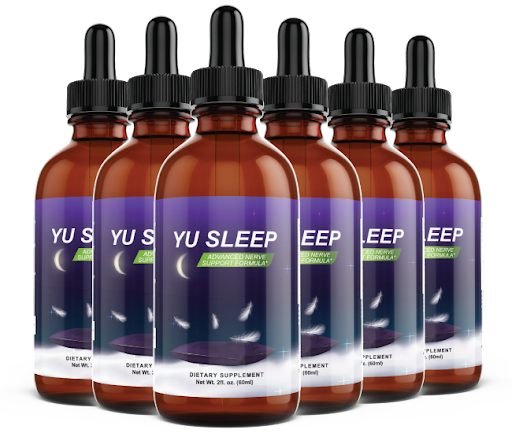
Yu Sleep is a dietary supplement sold as a liquid tincture in a 2 fl. oz. (60mL) amber dropper bottle. According to its label, each bottle provides approximately 30 servings, with one serving defined as 2mL, or two full droppers.
It is positioned by its marketing as a nightly sleep-support formula intended for adults dealing with occasional difficulty falling asleep, staying asleep, or waking up groggy — not as a treatment for a diagnosed sleep disorder.
Full Supplement Facts
This is the exact Supplement Facts panel as printed on the Yu Sleep product label — reproduced here for transparency, not summarized or reinterpreted.
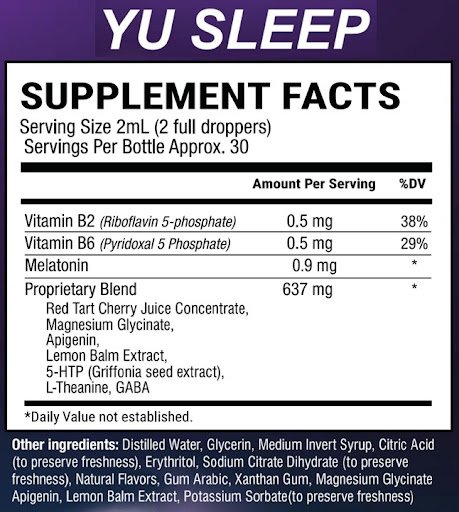
| Ingredient | Amount |
|---|---|
| Vitamin B2 (Riboflavin 5-phosphate) | 0.5mg (38% DV) |
| Vitamin B6 (Pyridoxal 5-phosphate) | 0.5mg (29% DV) |
| Melatonin | 0.9mg |
| Proprietary Blend — 637mg total: Tart cherry juice concentrate, magnesium glycinate, apigenin, lemon balm extract, 5-HTP (Griffonia seed extract), L-theanine, GABA | |
Other ingredients: distilled water, glycerin, medium invert syrup, citric acid, erythritol, sodium citrate dihydrate, natural flavors, gum arabic, xanthan gum, potassium sorbate.
Why this matters: the seven proprietary-blend ingredients share a single combined weight (637mg) with no individual amounts listed. That's a common supplement-industry practice, but it means the specific dose of any one ingredient — say, how much GABA or L-theanine is actually in a serving — isn't independently verifiable from the label. See what research says about each of these ingredients →
Yu Sleep's stated mechanism
Product claimYu Sleep's marketing describes the formula as designed to work "with your body's natural sleep rhythm instead of forcing sleep with high-dose melatonin or harsh synthetic sedatives" — using a comparatively low 0.9mg melatonin dose alongside calming amino acids, botanicals, and B vitamins.
Independently, this framing lines up with real biology in one respect: melatonin does play a genuine role in signaling sleep timing to the brain, as described on our research page. Where the marketing claim goes further than current evidence — specifically calming "racing thoughts," preventing middle-of-the-night waking, and guaranteeing next-day energy — is where we'd flag it as a product claim rather than an established finding. The evidence page breaks down what's actually been studied, ingredient by ingredient.
How Yu Sleep is used
Take two droppers (2mL)
About 30 minutes before your intended bedtime, per label directions.
Use it nightly
Product information positions Yu Sleep as a consistency-dependent formula — marketing states most people should allow "a few nights" for their body to respond.
Pair with good sleep hygiene
Yu Sleep's own instructions recommend avoiding caffeine, heavy meals, and screens close to bedtime — which matches independently research-backed sleep hygiene guidance, not just marketing advice.
Before you start
This statement has not been evaluated by the Food and Drug Administration. This product is not intended to diagnose, treat, cure, or prevent any disease. Because the formula contains 5-HTP, which can interact with antidepressant medication, and melatonin, which can interact with sedatives and blood thinners, talk to a healthcare provider before use if you take any medication, are pregnant or nursing, or manage a medical condition.
Intended audience
Occasional restless sleep
Adults dealing with occasional trouble falling asleep or staying asleep, without a diagnosed sleep disorder.
Stress-related wind-down
People looking for a nightly wind-down routine alongside — not instead of — good sleep habits.
Not for everyone
Not marketed for children, and not positioned as a treatment for insomnia, sleep apnea, or other diagnosed medical sleep disorders.
Want the full evaluation?
Read our balanced, pros-and-cons review — including where we think the evidence is strongest and where it's thinnest.